Discover Uzbekistan's Fergana Valley: authentic silk in Margilan, ceramics in Rishtan, and real local culture without tourist crowds. Complete guide with itinerary.
While tourists flock to Samarkand and Bukhara, they miss one of Uzbekistan's most rewarding regions: the Fergana Valley. This is where you'll find the country's living craft traditions — hand-loomed silk, centuries-old ceramics, forged knives — still made the same way they were generations ago, with far fewer tourist crowds than the main Silk Road cities.
This guide covers what actually makes the valley worth the trip, an honest 2-3 day itinerary, and — since getting there involves a real mountain pass — exactly what the journey looks like and how to do it comfortably.
Why Most Tourists Skip Fergana (And Why That's a Mistake)
| Common Concern | Reality |
|---|---|
| "It's far from the main route" | About 320 km from Tashkent — 4-4.5 hours by private car |
| "Nothing famous there" | The country's best silk, ceramics, and knife-making are all here |
| "No one goes there" | Exactly — that's what makes it special |
| "Is it safe?" | Just as safe as anywhere else in Uzbekistan |
| "How do I even get there?" | One real mountain pass (Kamchik, 2,268m) separates it from Tashkent — see below |
What Makes Fergana Valley Special
1. Authentic Silk Production (Margilan)
Margilan is the silk capital of Central Asia. Its Yodgorlik Silk Factory, operating since 1972, is where you can watch the entire process by hand — from unwinding cocoons to the traditional ikat (abr) dyeing technique that produces the region's famous rippled color patterns.
- Watch the full silk-making process, from cocoon to loom
- Traditional ikat weaving demonstrations
- Buy adras, shokhi, and atlas silk fabrics directly from the source
- Noticeably lower prices than the same fabrics sold in Bukhara or Samarkand
2. Traditional Ceramics (Rishtan)
The distinctive blue-glazed ceramics you'll see across Uzbekistan mostly come from Rishtan, home to a ceramic tradition at least 800 years old thanks to a local deposit of a specific reddish clay found nowhere else in the country. Rishtan's potters are even responsible for the glazed tiles on Kokand's Khudayar Khan Palace (below) — the same craft tradition you'll see on the workshop floor is on the building itself.
- Visit working master potters' workshops
- Watch the full process, from clay to glaze to kiln
- Buy directly from the artists making the pieces
3. Knife Making (Chust)
The famous Uzbek pichoq knife — recognizable by its curved blade and decorated handle — is traditionally forged in Chust, using techniques passed down through generations of blacksmith families.
- Traditional forging demonstrations
- Handmade, decorated handles
- A genuinely practical, packable souvenir
4. The Real Bazaars
Fergana Valley's bazaars serve locals, not tour groups.
- Margilan Bazaar — one of Central Asia's largest, busiest on Sunday
- Local produce, spices, and crafts at local prices
- Minimal English signage — a genuine slice of daily Uzbek life
5. The Surrounding Mountains
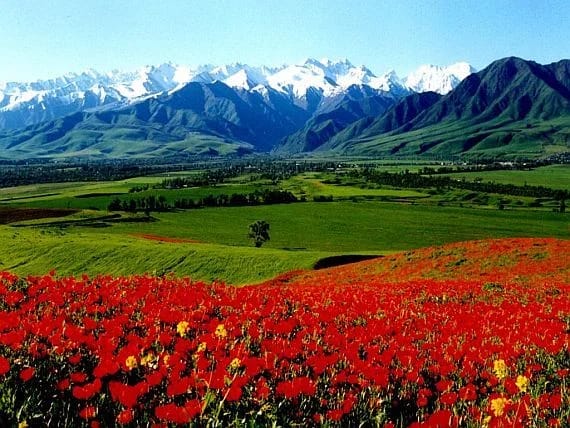
The valley itself is ringed by the Tian Shan and Pamir-Alay mountain ranges, with hiking trails through juniper forest and open pasture where shepherds still graze flocks in summer. If you want to go further, Shakhimardan (an alpine village around the "Blue Lake") sits in the mountains south of Fergana city — but it's technically an Uzbek exclave surrounded entirely by Kyrgyzstan, so visiting requires valid multi-entry visas for both countries and isn't a simple add-on to a standard itinerary. For most visitors, the valley's own foothill villages and orchards are the easier, equally scenic option.
Fergana Valley Itinerary: 2-3 Days
Day 1: Margilan & Silk
| Time | Activity | Notes |
|---|---|---|
| Morning | Yodgorlik Silk Factory | Arrive early to see the looms in full operation |
| Midday | Lunch at a local cafe | Try Fergana-style plov |
| Afternoon | Margilan Bazaar | Best on Sunday |
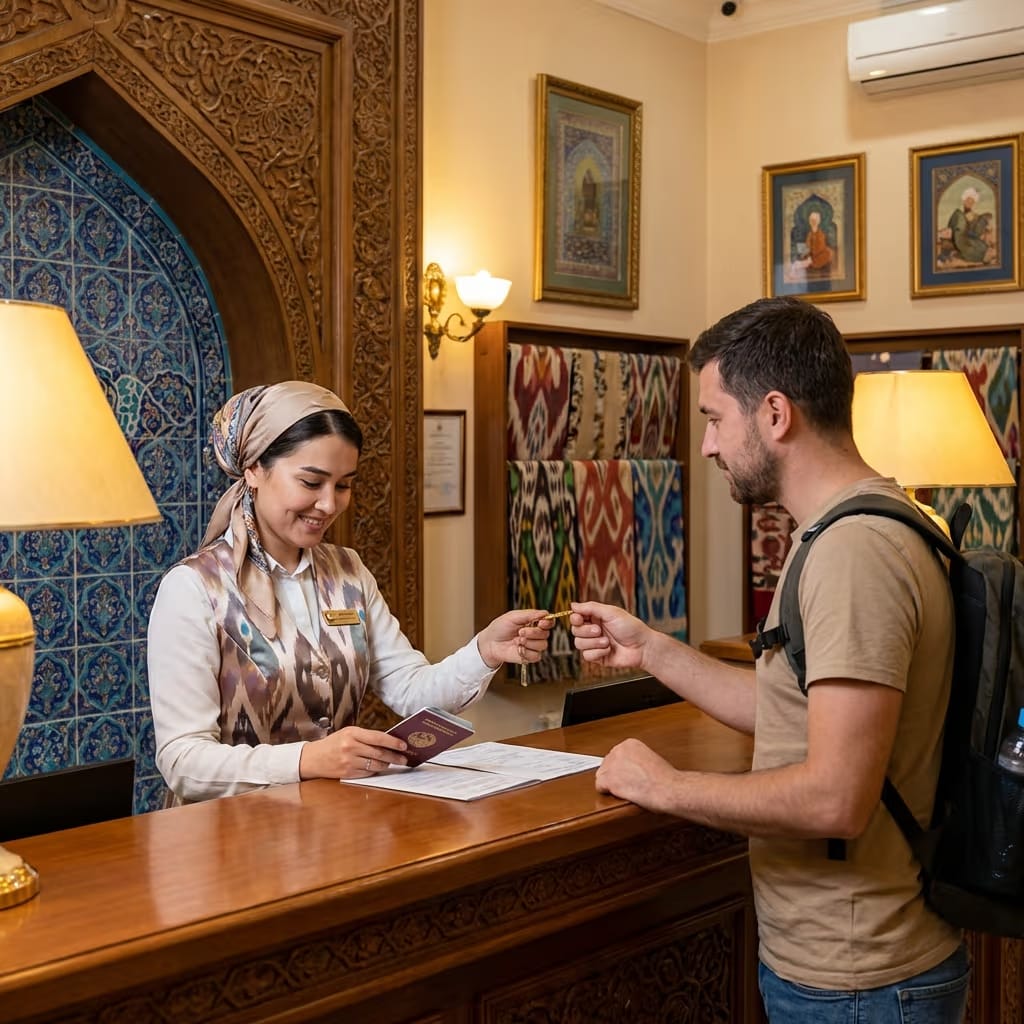
| Evening | Check into your hotel | Fergana city has the widest range of options |
Day 2: Rishtan Ceramics & Kokand
| Time | Activity | Notes |
|---|---|---|
| Morning | Drive to Rishtan | About 30 minutes from Fergana city |
| Midday | Visit ceramic workshops | Buy directly from the potters |
| Afternoon | Khudayar Khan Palace, Kokand | Built 1865-1872; note the glazed tiles made in Rishtan |
| Evening | Return to Fergana |
Day 3: Chust & Return
| Time | Activity | Notes |
|---|---|---|
| Morning | Chust knife workshops | Watch the blacksmiths at work |
| Afternoon | Drive back to Tashkent, or continue your route |
Note that Margilan, Rishtan, Kokand, and Chust are all separate towns spread across the valley — this itinerary genuinely depends on having a car for the whole two to three days, not just for the initial trip in from Tashkent.
How to Get to Fergana Valley
From Tashkent
| Option | Duration | Price | Comfort |
|---|---|---|---|
| Private transfer | 4-4.5 hours | from $130 (economy, whole car) | ⭐⭐⭐⭐⭐ |
| Flight | ~55 minutes | roughly $40-100 | ⭐⭐⭐⭐ |
| Shared taxi | 4-5 hours | ~$15-20/person | ⭐⭐⭐ |
| Public bus | 6+ hours | ~$8-10 | ⭐⭐ |
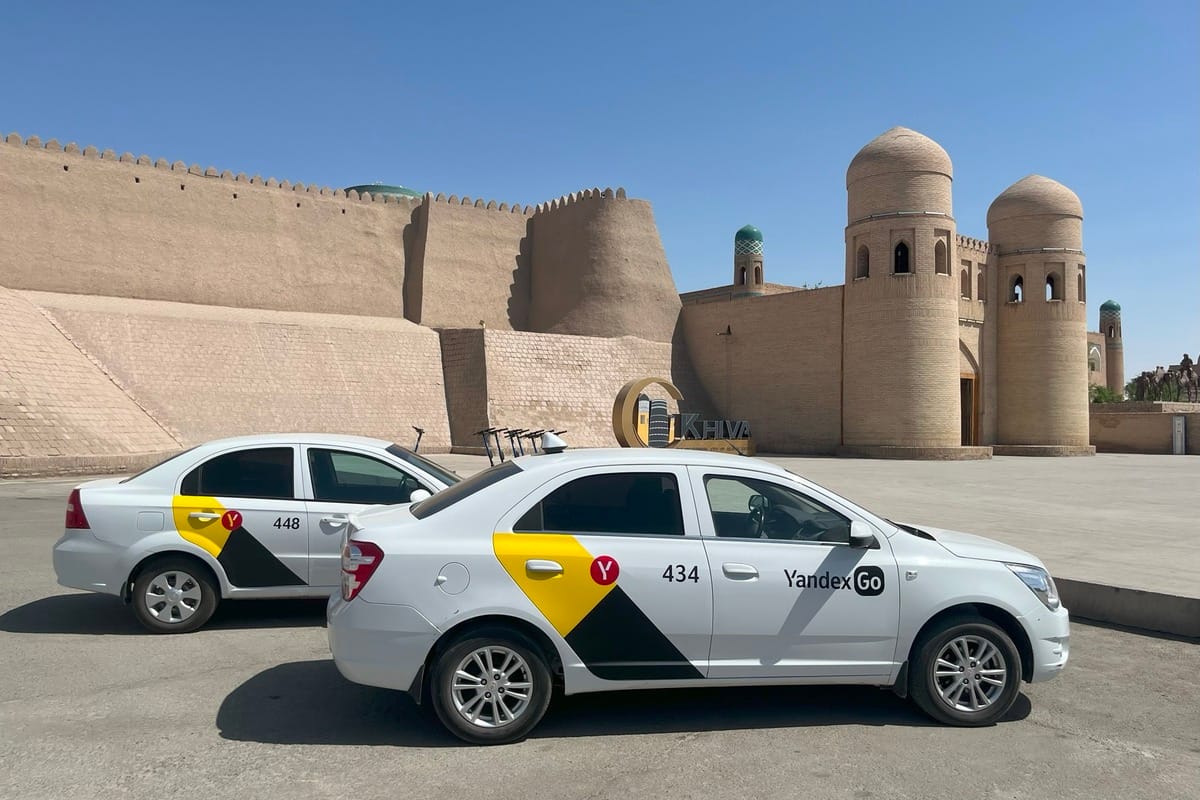
Why a private transfer makes sense here: Beyond comfort, you control your own schedule over the mountain pass (below) instead of being locked into a shared taxi's timing, and — unlike flying or the bus — the same car and driver can then take you on to Rishtan, Kokand, and Chust for the rest of your itinerary, since those towns aren't practically connected by public transport on a tourist timeline.
The Kamchik Pass
To reach Fergana Valley by road from Tashkent, you cross the Kamchik Pass through the Qurama Mountains, at 2,268 meters elevation — genuinely one of the most scenic drives in the country, and for centuries part of the Silk Road route itself.
A few honest details worth knowing:
- The road (not a tunnel) goes directly over the pass — there's a separate rail tunnel nearby (the Angren-Pop line, opened 2016) for trains only, not cars
- The pass can close in winter due to avalanche risk, and is occasionally affected by landslides — a reason to travel with a driver who knows current road conditions rather than self-driving into an unfamiliar closure
- There are genuine viewpoints worth stopping for photos — something a private transfer lets you do on your own schedule, unlike a shared taxi or bus
Skip the Shared Taxi Wait
Private Transfer Tashkent → Fergana — from $130
One private car over the Kamchik Pass, on your own schedule, with stops at the viewpoints — then the same driver can take you on to Rishtan, Kokand, and Chust.
from $130 / whole car $130
Book Private TransferHeading Back to Tashkent?
from $100 / whole car $100
Private Transfer Fergana → Tashkent — from $100
Same comfortable ride in reverse, hotel to hotel — no need to arrange a return taxi from the valley.
Where to Stay in Fergana Valley
Fergana city has the widest and most modern range of hotels in the valley, from budget guesthouses to mid-range business hotels, generally in the $25-70/night range depending on standard. It's the most practical base for day trips to Margilan, Rishtan, and Kokand, all under an hour's drive away.
Margilan and Kokand both have a handful of basic, clean local hotels if you'd rather split your stay closer to the workshops themselves, though the selection and standard is noticeably more limited than in Fergana city.
Best Time to Visit Fergana
| Season | Weather | Crowds | Recommendation |
|---|---|---|---|
| Spring (Apr-May) | Perfect | Very few | ⭐ Best time |
| Summer (Jun-Aug) | Hot | None | ⚠️ Morning visits only |
| Fall (Sep-Oct) | Perfect | Very few | ⭐ Best time |
| Winter (Nov-Mar) | Cold | None | Workshops still open, but the Kamchik Pass can close after heavy snow — build in flexibility if traveling this season |
Practical Tips for Fergana
1. Bring Cash
ATMs exist in Fergana city but are less reliable than in Tashkent or Samarkand. Bring enough Uzbek som for your stay.
2. Learn a Few Words
Less English is spoken here than in the main tourist cities. A few phrases go a long way:
- "Rahmat" — Thank you
- "Qancha?" — How much?
- "Chiroyli" — Beautiful
3. Respect the Culture
Fergana Valley is generally more conservative than Tashkent. Dress modestly, especially for women, particularly when visiting workshops and bazaars.
4. Sunday Is Bazaar Day
Margilan's bazaar is at its biggest and best on Sunday mornings — worth timing your visit around if possible.
5. Plan Around the Pass, Not Just the Distance
The 320 km from Tashkent looks short on a map, but the Kamchik Pass means it's a real mountain drive, not a highway cruise. Give yourself the full 4-4.5 hours rather than planning a tight same-day return.
Frequently Asked Questions
How far is Fergana Valley from Tashkent, and how long does it take to get there?
About 320 km by road, taking roughly 4 to 4.5 hours by private car via the Kamchik Pass. A direct flight takes about 55 minutes, while a public bus can take 6 hours or more.
Is Fergana Valley safe to visit?
Yes — it's just as safe as anywhere else in Uzbekistan, and local hospitality is genuinely exceptional. The main practical consideration is the Kamchik Pass road, which can close temporarily in winter due to avalanche risk.
What is the Kamchik Pass, and is there a tunnel through it?
The Kamchik Pass is a 2,268-meter mountain crossing through the Qurama Mountains that the road from Tashkent to Fergana Valley goes directly over. There's a separate rail tunnel nearby (opened 2016) for trains only — cars still travel over the pass itself, not through a tunnel.
Can the road to Fergana Valley be closed?
Yes, occasionally. The Kamchik Pass is prone to winter avalanche risk and can close temporarily after heavy snow. If traveling between November and March, it's worth building some flexibility into your schedule.
What is Margilan famous for?
Margilan is the historic silk-weaving capital of Central Asia. Its Yodgorlik Silk Factory, operating since 1972, produces traditional ikat-patterned silk fabrics (adras, shokhi, and atlas) using entirely hand-based methods you can watch in person.
Why are Rishtan's ceramics blue?
Rishtan sits on a deposit of a specific reddish clay found nowhere else in Uzbekistan, and its potters have worked with a distinctive blue glaze for at least 800 years. The same tradition produced the glazed tiles on Kokand's Khudayar Khan Palace.
Is 2-3 days enough time for Fergana Valley?
Yes, 2-3 days comfortably covers the highlights — Margilan's silk factory, Rishtan's ceramic workshops, Kokand's Khudayar Khan Palace, and Chust's knife-making — as long as you have a car for the whole trip, since these towns are spread across the valley and aren't well connected by public transport on a tourist timeline.
Should I fly or drive to Fergana Valley?
Flying is faster (about 55 minutes) but only gets you to Fergana city itself. Driving takes 4-4.5 hours but means the same car and driver can then take you on to Rishtan, Kokand, and Chust — genuinely useful given how spread out the valley's sights are.
What's the best time of year to visit Fergana Valley?
Spring (April-May) and fall (September-October) offer the best weather and are still very uncrowded. Summer is workable but hot enough that outdoor visits are best done in the morning. Winter workshops stay open, but plan around possible Kamchik Pass closures.
Where should I stay in Fergana Valley?
Fergana city has the widest range of hotels, generally $25-70 a night depending on standard, and is well positioned for day trips to Margilan, Rishtan, and Kokand — all under an hour away. Margilan and Kokand have a more limited selection of basic local hotels if you'd rather stay closer to the workshops.
Can I visit Shakhimardan (the Blue Lake) as part of a Fergana Valley trip?
It's possible, but it's technically an Uzbek exclave entirely surrounded by Kyrgyzstan, so visiting requires valid multi-entry visas for both countries and entry isn't always guaranteed. It's not a simple add-on for most standard itineraries — the valley's own foothill villages offer similar scenery without the border complexity.